

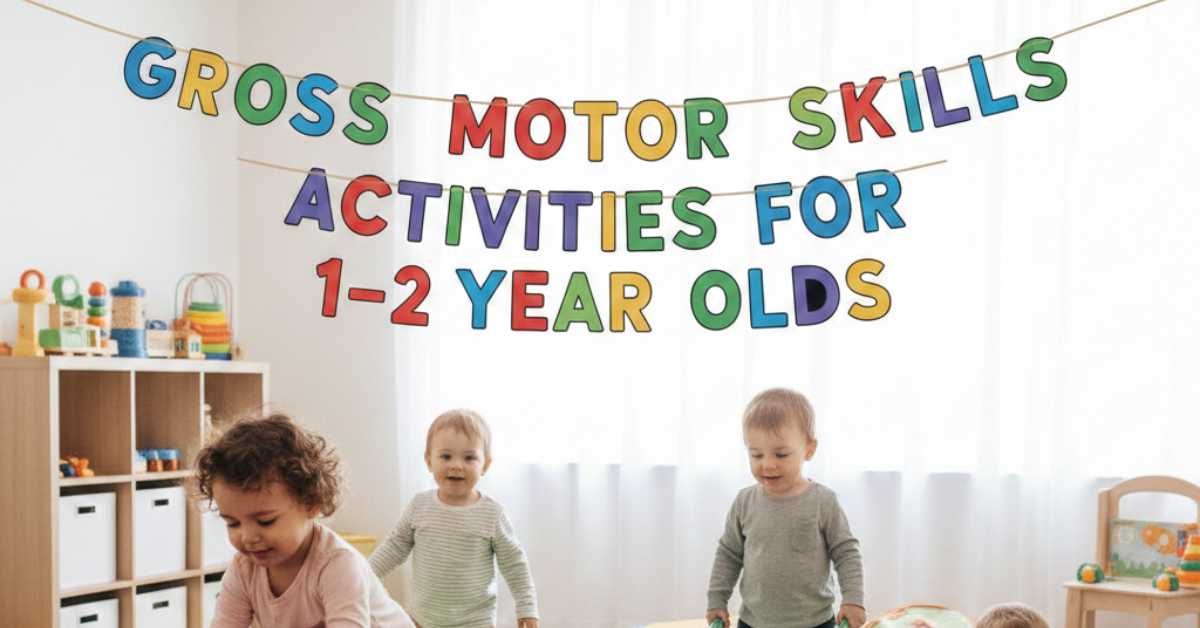
Have you ever watched a one-year-old wobble across the room like a tiny explorer on a mission? Those first steps, squats, and climbs may look simple—but they’re powerful milestones. Gross motor skills activities for 1-2 year olds play a crucial role in helping toddlers build strength, balance, coordination, and confidence.
In this guide, you’ll find practical, research-backed, and genuinely fun gross motor activities for infants and young toddlers. Whether you’re a parent, caregiver, or early childhood educator, these ideas will help you support healthy physical development—without fancy equipment or complicated setups.
Why Gross Motor Skills Matter in the First Two Years
Gross motor skills involve large muscle groups in the arms, legs, and core. During the first two years, children rapidly develop abilities like:
-
Rolling
-
Sitting
-
Crawling
-
Pulling up
-
Cruising
-
Walking
-
Climbing
According to the American Academy of Pediatrics, early movement experiences are essential for physical health, brain development, and long-term coordination.
When toddlers engage in gross motor skills activities for 1-2 year olds, they are not just “burning energy.” They are:
-
Strengthening muscles and bones
-
Developing balance and spatial awareness
-
Improving posture and core stability
-
Building independence and problem-solving skills
-
Supporting cognitive growth through movement
In short: big movements build big brains.
Developmental Milestones for 1–2 Year Olds
Every child develops at their own pace. However, between 12 and 24 months, many toddlers begin to:
-
Stand independently
-
Walk without assistance
-
Climb onto furniture
-
Carry toys while walking
-
Kick a ball
-
Attempt stairs with support
-
Squat and stand back up
The Centers for Disease Control and Prevention provides milestone checklists that are helpful for tracking development.
Keep in mind: delays don’t always signal a problem—but consistent lack of progress should be discussed with a pediatrician.
Best Gross Motor Skills Activities for 1–2 Year Olds
Below are practical, engaging, and safe large motor activities for infants and young toddlers. Most require only everyday household items.
1. Cushion Mountain Climbing
What it builds: balance, leg strength, coordination
Stack couch cushions or pillows into a small “mountain.” Encourage your toddler to climb over (with supervision).
Why it works: Climbing challenges their balance system and strengthens core muscles.
Safety tip: Always supervise closely and ensure the surface is soft.
2. Push Toy Walking
What it builds: walking stability, leg strength
Push toys or sturdy walkers encourage confident movement. As toddlers push forward, they practice weight shifting and coordination.
If you don’t have a push toy, a weighted laundry basket works too.
3. Ball Play (Roll, Kick, Toss)
What it builds: coordination, timing, spatial awareness
Ball activities are classic gross motor activities for infants and toddlers. Try:
-
Rolling a ball back and forth
-
Gently tossing into a basket
-
Encouraging early kicking
These movements improve bilateral coordination—using both sides of the body together.
4. Tunnel Crawling
What it builds: shoulder stability, cross-body movement
Use a play tunnel or create one with chairs and blankets. Crawling strengthens upper body muscles and supports brain hemisphere communication.
Crawling remains valuable—even after walking begins.
5. Dance and Freeze
What it builds: balance control, listening skills
Play music and dance together. Occasionally pause the music and say “freeze!”
This simple activity strengthens body awareness and introduces early impulse control.
6. Stair Exploration (With Support)
What it builds: leg power, coordination
Holding your hands or a railing, let your toddler practice stepping up stairs. Descend on hands and knees for safety.
Stairs are excellent infant gross motor activities because they require strength and planning.
7. Obstacle Courses
What it builds: whole-body coordination
Create a simple path:
-
Crawl under a table
-
Walk around a box
-
Step over a pillow
-
Toss a ball into a bin
Obstacle courses combine multiple large motor activities for infants into one playful challenge.
Outdoor Gross Motor Activities for Infants and Toddlers
Fresh air adds new sensory experiences. Outdoor gross motor skills activities for 1-2 year olds include:
-
Grass crawling
-
Push toy walks on sidewalks
-
Playground exploration (small toddler structures)
-
Water play with pouring and lifting
-
Mini hill walking
Uneven surfaces strengthen stabilizing muscles and improve balance more effectively than flat indoor floors.
How Much Physical Activity Do Toddlers Need?
The World Health Organization recommends that children under 5 should be physically active several hours a day in varied ways.
For 1-2 year olds, this means frequent movement opportunities—not structured workouts. Short bursts of activity throughout the day are perfect.
Avoid prolonged confinement (strollers, high chairs) when possible. Movement is their main way of learning.
Tips for Safe and Effective Infant Gross Motor Activities
To get the most out of gross motor activities for infants:
Follow Their Lead
If they’re fascinated with climbing, safely support climbing. Interest drives engagement.
Keep Instructions Simple
Toddlers understand short phrases like “Step up!” or “Kick the ball!”
Prioritize Supervision
Especially with climbing or stairs.
Focus on Fun Over Perfection
It doesn’t need to look polished. Wobbly steps are still progress.
Signs Your Toddler May Need Extra Support
Consider consulting a pediatrician if by 18–24 months your child:
-
Isn’t walking independently
-
Consistently walks on toes
-
Shows extreme muscle stiffness or floppiness
-
Avoids bearing weight on legs
Early intervention makes a significant difference.
FAQs: Gross Motor Skills Activities for 1–2 Year Olds
1. What are examples of gross motor skills activities for 1-2 year olds?
Examples include climbing cushions, pushing toys, dancing, crawling through tunnels, ball play, and simple obstacle courses.
2. How can I improve my 1-year-old’s gross motor skills?
Encourage daily movement, limit restrictive devices, allow safe exploration, and provide varied surfaces like grass, carpet, and ramps.
3. Are gross motor activities different from fine motor activities?
Yes. Gross motor skills use large muscle groups (walking, climbing), while fine motor skills involve small movements (stacking blocks, picking up small objects).
4. How often should toddlers practice large motor activities?
Multiple times daily. Movement should be naturally built into play routines.
5. Can screen time affect gross motor development?
Excessive screen time can reduce physical activity opportunities. Active play is essential for healthy development.
Conclusion: Big Movement, Big Development
Gross motor skills activities for 1-2 year olds don’t need to be complicated. In fact, the simplest activities—climbing cushions, chasing balls, dancing in the living room—often make the biggest impact.
During the first two years, movement is learning. Each wobble, climb, and squat strengthens not just muscles, but confidence and brain development.
Start small. Stay consistent. Follow your toddler’s curiosity.
And if you’re ready to support the full picture of development, explore related activities for fine motor skills, sensory play, and language growth. Your little mover is just getting started.