

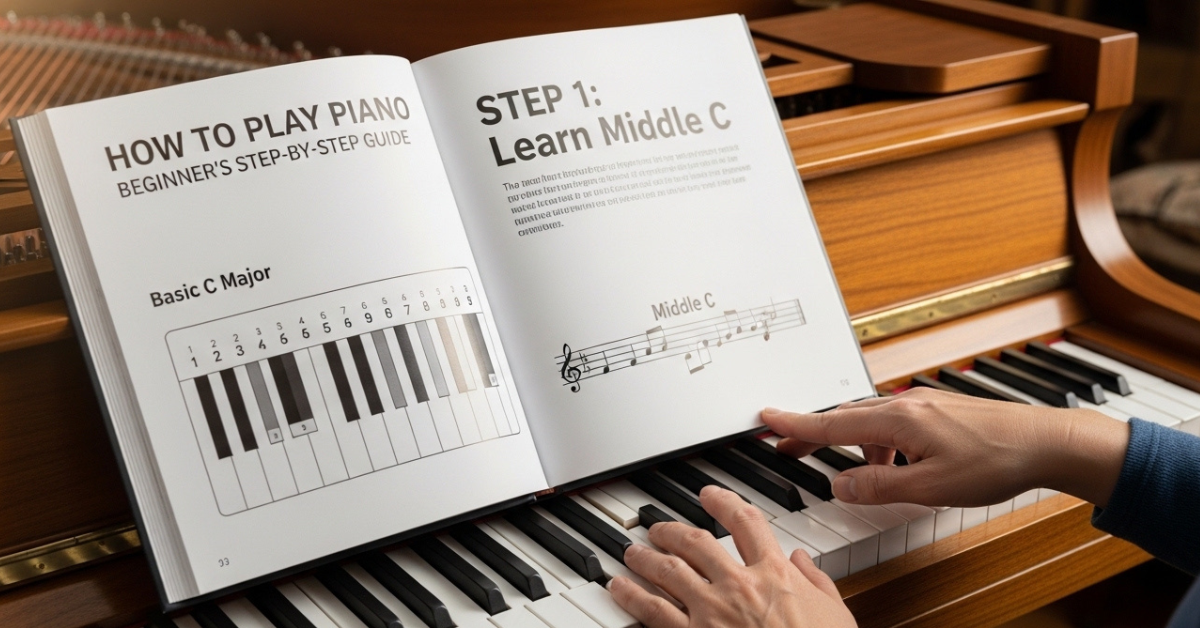
Ever sat in front of a piano and felt both excited and completely overwhelmed? You’re not alone. Learning how to play piano can feel intimidating at first—but once you understand the basics, it becomes one of the most rewarding skills you’ll ever develop.
In this guide, we’ll break down how to play piano for beginners, how to practice effectively, and even touch on how to play piano songs (including classics like “Piano Man”). If you’ve also wondered how to play Piano Man on harmonica or how to play piano man on the harmonica, we’ll cover that too.
Let’s get started.
Why Learn How to Play Piano?
Before we dive into technique, here’s why the piano is such a powerful instrument to learn:
-
It teaches music theory visually and practically.
-
It improves memory and coordination.
-
It’s the foundation of songwriting and composing.
-
You can play solo or accompany others easily.
Unlike many instruments, the piano lays everything out clearly in front of you. Every note is visible. That makes learning more intuitive.
Piano Basics Every Beginner Should Know
If you’re serious about learning how to play piano for beginners, you must understand the layout first.
The Keyboard Layout
A standard piano has 88 keys, made up of:
-
White keys – Natural notes (A, B, C, D, E, F, G)
-
Black keys – Sharps (#) and flats (♭)
The pattern repeats every 12 notes. Find a group of two black keys—that white key just to their left is C. That’s your reference point.
Hand Position and Posture
Good habits early on save frustration later.
Proper posture:
-
Sit straight, shoulders relaxed
-
Elbows slightly above the keys
-
Fingers curved (like holding a small ball)
Your thumbs are Finger 1. Pinkies are Finger 5. This numbering helps when reading sheet music.
How to Play Piano for Beginners: Step-by-Step
Let’s break it down simply.
1. Learn the C Major Scale
Start here because it uses only white keys:
C – D – E – F – G – A – B – C
Practice slowly with both hands separately first.
2. Master Basic Chords
Chords are the backbone of most popular piano songs.
| Chord | Notes | Finger Position (Right Hand) |
| C Major | C – E – G | 1 – 3 – 5 |
| G Major | G – B – D | 1 – 3 – 5 |
| F Major | F – A – C | 1 – 3 – 5 |
| A Minor | A – C – E | 1 – 3 – 5 |
With just these four chords, you can already start learning how to play piano songs like pop and rock hits.
3. Practice Simple Songs
The key to staying motivated is playing real music.
Beginner-friendly songs:
-
“Let It Be” – The Beatles
-
“Clocks” – Coldplay
-
“Someone Like You” – Adele
Notice how many songs repeat the same chord progressions. That’s good news for beginners.
How to Play Piano Songs Faster (Without Burning Out)
If you want to improve quickly:
-
Practice 20–30 minutes daily instead of 2 hours once a week
-
Use a metronome
-
Break songs into sections
-
Practice hands separately
Consistency beats intensity every time.
Reading Sheet Music vs. Playing by Ear
When learning how to play piano, you have two main paths.
Reading Sheet Music
Great for classical music and structured learning.
Playing by Ear
Ideal for pop, jazz, and improvisation.
The best pianists develop both skills over time.
How to Play “Piano Man” (Piano Version)
“Piano Man” by Billy Joel is one of the most requested beginner-intermediate songs.
Basic chord progression (simplified):
-
C – G – F – C
-
F – C – G
The left hand typically plays broken chords or an “oom-pah” pattern. The right hand handles melody.
If you’re just starting, focus on playing the chords cleanly before attempting the full arrangement.
How to Play Piano Man on Harmonica
Now for something different.
If you’re curious about how to play Piano Man on harmonica (or how to play piano man on the harmonica), here’s a quick beginner overview:
-
The song uses a C harmonica.
-
The famous intro riff uses draw and blow notes in the middle register.
-
Focus on bending notes slightly for expression.
Basic intro tab (simplified conceptually):
-
4 blow – 4 draw – 5 blow – 4 blow
-
4 draw – 5 draw
For precise harmonica tabs, you can reference beginner guides on sites like:
-
harmonica.com
-
musicnotes.com
Those make great external links for authority content.
How Long Does It Take to Learn How to Play Piano?
It depends on your goals.
-
1–2 weeks: Play simple melodies
-
2–3 months: Basic chords and full songs
-
1 year: Strong beginner/intermediate skills
-
3+ years: Advanced proficiency
Daily practice matters more than talent.
Common Beginner Mistakes to Avoid
When learning how to play piano, avoid:
-
Playing too fast too soon
-
Ignoring rhythm
-
Skipping warmups
-
Not using proper fingering
-
Practicing mistakes repeatedly
Slow practice builds fast results.
Best Tools to Help You Learn
Consider adding internal links here to:
-
A “Best Digital Pianos for Beginners” guide
-
A “Simple Music Theory Explained” article
-
A “Piano Practice Routine Template”
Helpful external resources:
-
Berklee Online (berklee.edu)
-
MusicTheory.net
-
PianoLessons.com
These improve credibility and SEO authority.
FAQs About How to Play Piano
1. How hard is it to learn how to play piano?
It’s easier than most people think. Basic songs can be played within weeks if you practice consistently.
2. Can I learn how to play piano without a teacher?
Yes. Online tutorials, apps, and structured practice plans make self-learning very possible.
3. What is the fastest way to learn how to play piano for beginners?
Focus on chords and simple songs instead of advanced theory at first.
4. How do I start learning how to play piano songs?
Start with:
-
Three or four basic chords
-
Slow tempo
-
Hands separately first
5. How to play Piano Man on harmonica for beginners?
Use a C harmonica, learn basic blow/draw technique, and practice the intro slowly before attempting the full song.
Final Thoughts: Start Playing Today
Learning how to play piano isn’t about being perfect—it’s about showing up consistently. Start with scales, master a few chords, and then jump into real songs. That’s how momentum builds.
Whether your goal is to play relaxing evening melodies, perform for friends, or even tackle “Piano Man,” the journey begins with small daily practice.
Next step?
Pick a simple song, set a 20-minute timer, and start playing.
You’ll be surprised how quickly progress happens.