

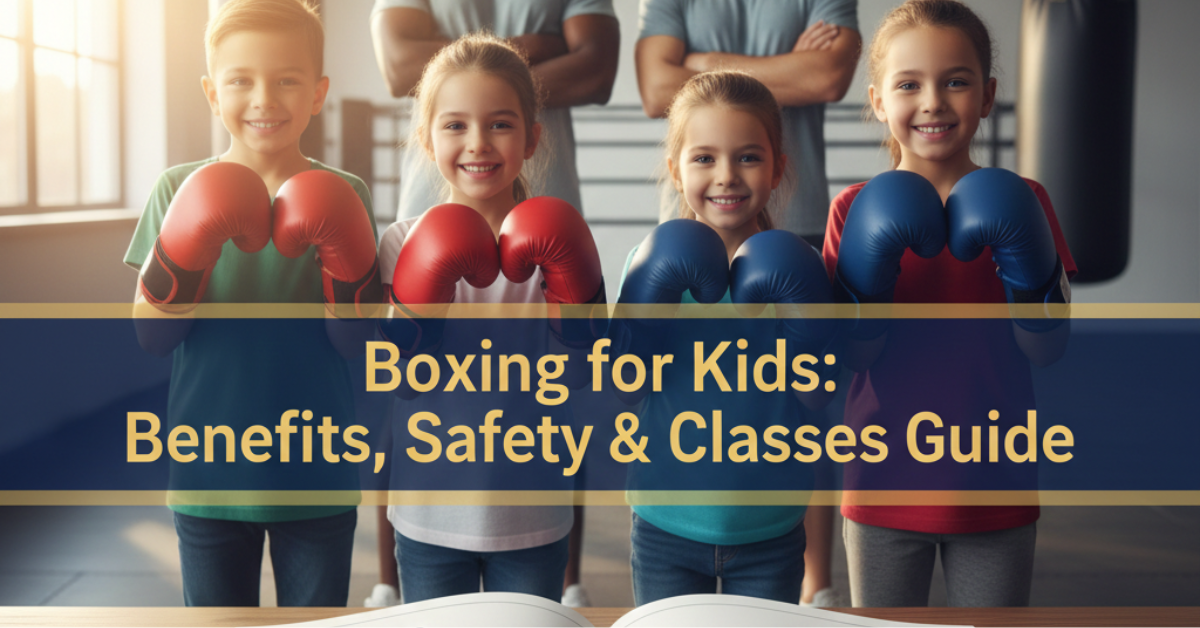
Ever notice how kids seem to have endless energy? Imagine channeling that energy into something that builds confidence, discipline, and strength all at once. That’s exactly what boxing for kids can do.
Whether you’re curious about enrolling your child in a kids boxing class or simply exploring new sports options, this guide will walk you through the benefits, safety considerations, age recommendations, and what to expect from boxing lessons for kids and even boxing for teens.
Let’s step into the ring—no black eye required.
What Is Boxing for Kids?
At its core, boxing for kids is a structured sport that teaches basic boxing techniques—like footwork, punches, and defensive moves—in a safe and controlled environment.
But here’s what surprises most parents: youth boxing programs aren’t about fighting.
Instead, most kids boxing classes focus on:
-
Fitness and conditioning
-
Agility and coordination
-
Self-discipline
-
Respect and sportsmanship
-
Self-defense skills
-
Confidence building
Many youth programs operate under recognized bodies like USA Boxing, while major organizations such as USA Boxing and International Boxing Association set safety standards for amateur boxing worldwide.
Why Boxing for Kids Is Growing in Popularity
More parents are choosing boxing lessons for kids over traditional team sports—and for good reason.
1. Builds Physical Strength and Fitness
Boxing is a full-body workout. It improves:
-
Cardiovascular endurance
-
Core strength
-
Balance
-
Speed and reaction time
Unlike some youth sports where kids may spend time waiting on the sidelines, boxing keeps them constantly moving.
2. Boosts Confidence and Self-Esteem
There’s something powerful about mastering a new skill. Learning combinations, improving technique, and seeing measurable progress gives children a confidence boost that often spills over into school and social life.
Many boxing programs even draw inspiration from legendary fighters like Muhammad Ali, whose discipline and determination are often highlighted as character-building examples.
3. Teaches Discipline and Respect
Any reputable kids boxing class emphasizes:
-
Listening to coaches
-
Following rules
-
Controlling emotions
-
Respecting training partners
These lessons go far beyond the gym.
Is Kids Boxing Safe?
This is the question every parent asks—and rightly so.
The good news? Youth boxing today is far more structured and safety-focused than many people assume.
How Safety Is Prioritized
In organized programs:
-
Protective headgear is used in sparring.
-
Mouthguards and proper gloves are mandatory.
-
Coaches are certified.
-
Contact is limited, especially for beginners.
-
Some classes focus entirely on non-contact boxing fitness.
For younger children especially, many programs are skill-based only—no sparring at all.
If safety is your main concern, look for gyms affiliated with recognized governing bodies and certified trainers.
What Age Can Kids Start Boxing?
Most boxing lessons for kids begin around ages 6–8, depending on maturity and gym policy.
Here’s a general breakdown:
-
Ages 6–8: Fitness-based boxing games and coordination drills
-
Ages 9–12: Technique training, light supervised drills
-
Ages 13–17 (Boxing for Teens): Advanced skills, structured training, optional competitive pathways
For boxing for teens, training often becomes more intense, focusing on conditioning and advanced defensive techniques.
Always speak with the coach about what’s age-appropriate.
What Happens in a Kids Boxing Class?
Walking into your child’s first kids boxing class can feel intimidating—but most sessions follow a predictable and safe format.
Typical Class Structure
-
Warm-Up (10–15 minutes)
Jump rope, light jogging, agility drills. -
Skill Practice (15–20 minutes)
Learning jab, cross, hook, and basic footwork. -
Bag Work or Pad Work (15–20 minutes)
Hitting heavy bags or focus mitts (no hitting other kids). -
Conditioning (10 minutes)
Core workouts, push-ups, medicine ball drills. -
Cool Down and Stretch
You’ll likely notice that discipline and teamwork are emphasized from start to finish.
Benefits of Boxing for Teens
When it comes to boxing for teens, the sport offers some unique advantages:
-
Healthy stress outlet
-
Improved focus
-
Stronger emotional regulation
-
Reduced screen time
-
Clear goal-setting (whether fitness or competition)
Teenagers often appreciate boxing because it’s an individual sport. Progress depends on personal effort—not on teammates.
Choosing the Right Kids Boxing Gym
Not all gyms are created equal.
Here’s a checklist to help you find a quality program:
-
Certified and experienced coaches
-
Clear safety guidelines
-
Structured beginner classes
-
Clean and well-maintained equipment
-
Positive training environment
-
Transparent communication about sparring
It’s also wise to observe a class before signing up.
For additional safety guidance, you can reference youth sports safety resources from organizations like American Academy of Pediatrics or Centers for Disease Control and Prevention, which provide guidelines for youth physical activity.
Common Myths About Boxing for Kids
Let’s clear up a few misconceptions.
Myth 1: Boxing makes kids aggressive.
Reality: Structured boxing often improves emotional control and discipline.
Myth 2: Kids are constantly getting hit.
Reality: Many youth programs are non-contact.
Myth 3: It’s too dangerous for children.
Reality: With proper coaching and protective gear, injury risk is comparable to many other youth sports.
Equipment Needed for Boxing Lessons for Kids
Most gyms provide beginner equipment, but eventually your child may need:
-
Properly sized boxing gloves
-
Hand wraps
-
Mouthguard
-
Athletic clothing
-
Supportive athletic shoes
Always consult the coach before purchasing gear.
FAQs About Boxing for Kids
Is boxing safe for 7-year-olds?
Yes, when it’s a structured, supervised program that focuses on fitness and technique without full contact.
Do kids spar in boxing classes?
Not always. Many beginner and youth kids boxing classes avoid sparring completely, especially for younger children.
Is boxing good for ADHD or high-energy kids?
Many parents report improved focus and self-control due to the structured and disciplined environment.
Can girls join boxing lessons for kids?
Absolutely. Boxing is for everyone. Girls’ participation in youth boxing continues to grow worldwide.
What’s the difference between boxing for kids and boxing for teens?
Programs for teens typically include more intense conditioning and may introduce competitive training pathways.
Conclusion: Is Boxing for Kids Right for Your Family?
At first glance, boxing for kids may seem intense. But in reality, it’s one of the most structured, disciplined, and empowering youth sports available today.
From fitness gains to confidence building, a well-run kids boxing class provides far more than punching drills. Whether you’re considering boxing lessons for kids or structured boxing for teens, the key is choosing a reputable gym and understanding the program’s safety standards.
If you’re exploring ways to boost your child’s confidence and fitness, boxing might just be the unexpected answer.
Next step? Visit a local gym, observe a class, and talk to a certified coach. You may be surprised by what you see—and so might your child.