

Picture this: a commentator says a team needs “just five more yards,” and instantly you feel how close they are—even if you’ve never stepped on a football field yourself. That’s because the football field is a universal measuring stick. So let’s clear it up once and for all: how many yards is a football field, really?
This guide breaks down the length, width, and sideline-to-sideline dimensions of a football field using simple language, real-world comparisons, and accurate measurements. Whether you’re a sports fan, a student, or just curious, you’ll walk away with a clear mental picture.
How Many Yards Is a Football Field?
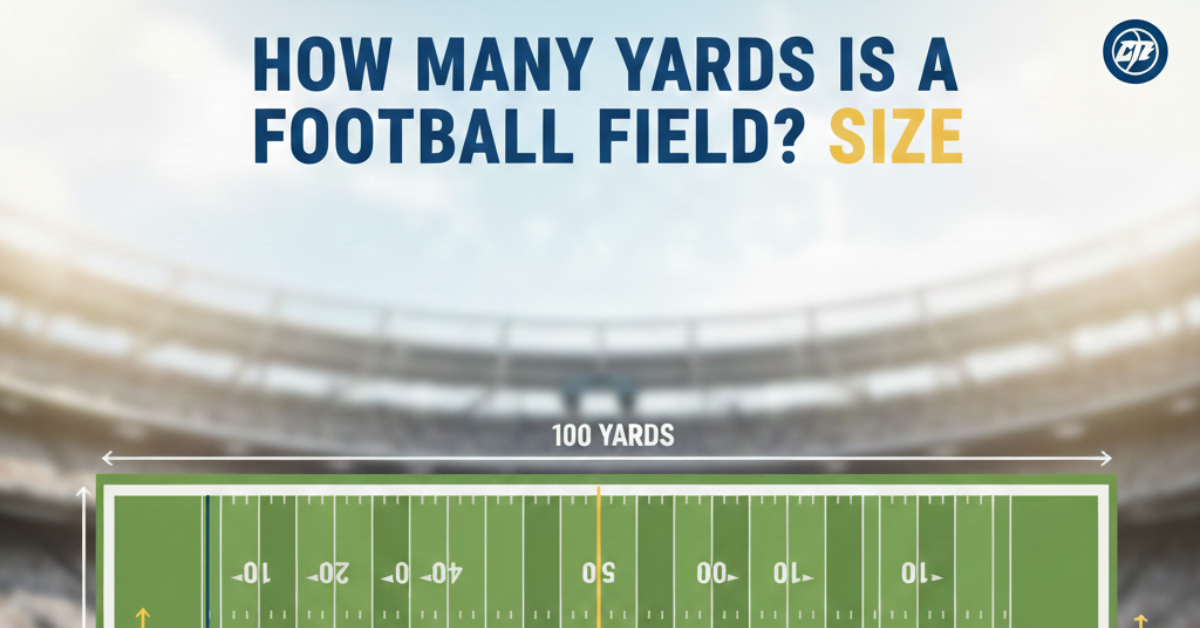
A standard American football field is 100 yards long from goal line to goal line.
If you include the two end zones, the full field measures:
-
120 yards total
-
100 yards of playing field
-
10-yard end zone on each side
This measurement applies to NFL, college, and high school football fields, with only minor variations in markings, not overall size.
How Many Yards Is a Football Field in Feet?
If you’re thinking in feet instead of yards, here’s the conversion:
-
1 yard = 3 feet
-
100 yards = 300 feet
-
120 yards = 360 feet (including end zones)
So when someone asks how many yards is a football field in feet, the most accurate answer depends on whether end zones are included.
Quick reference:
-
Playing field only: 300 feet
-
Full field: 360 feet
How Many Yards Is a Football Field Wide?
Length gets all the attention, but width matters too—especially when you hear phrases like “sideline to sideline.”
A football field is:
-
53.3 yards wide
-
Also written as 53⅓ yards
-
Equal to 160 feet
This width stays consistent across professional and amateur football.
How Many Yard Is a Football Field Sideline to Sideline?
Sideline to sideline refers to the full width of the field, not the playable area inside the boundary lines.
So if you’re asking how many yards is a football field sideline to sideline, the answer is:
-
53.3 yards
-
Or 160 feet
This measurement is especially useful in fitness training, drills, and broadcasting explanations.
Football Field Dimensions at a Glance
Here’s a quick breakdown for easy reference:
-
Length (goal line to goal line): 100 yards
-
Total length (with end zones): 120 yards
-
Width (sideline to sideline): 53.3 yards
-
Total area: 57,600 square feet
Why Football Fields Are Measured in Yards
Football has deep roots in American history, dating back to rugby and early field sports—games traditionally measured in yards. Over time, the yard stuck, becoming a defining feature of the sport’s language.
That’s why terms like:
-
First-and-10
-
Red zone
-
50-yard line
feel so natural to fans—they’re baked into how the game works.
How to Visualize a Football Field in Real Life
If yards feel abstract, try these comparisons:
-
A football field (without end zones) is about the length of a city block
-
The width is roughly half a soccer field
-
Running sideline to sideline five times equals about a quarter mile
Suddenly, those yardage stats feel a lot more real.
FAQs About Football Field Yardage
How many yard is a football field exactly?
A standard football field is 100 yards long, or 120 yards including end zones.
How many yard is a football field wide?
It’s 53.3 yards wide, measured sideline to sideline.
How many yard is a football field in feet?
That equals 300 feet (playing field only) or 360 feet including end zones.
Is a college football field the same size as an NFL field?
Yes, the field dimensions are the same. Differences are mainly in hash mark spacing.
Does every football field use yards?
American football does. International sports like soccer use meters instead.
Conclusion: The Key Takeaway
So, how many yards is a football field? The short, accurate answer is 100 yards long and 53.3 yards wide, with 120 yards total when you include the end zones. Once you understand these numbers, everything from game commentary to workout drills makes a lot more sense. If you enjoyed this breakdown, consider exploring related topics like soccer field dimensions, sports field comparisons, or even how athletes train using yard-based drills.