

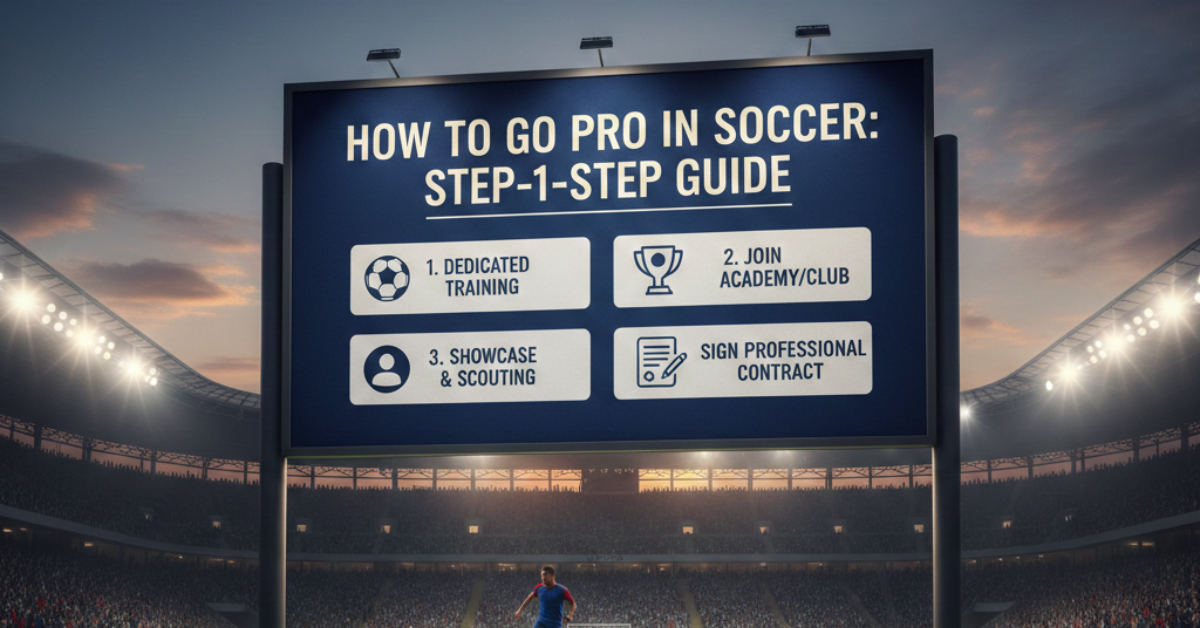
Dreaming of stadium lights, packed crowds, and signing your first professional contract? If you’ve ever wondered how to go pro in soccer, you’re not alone. Thousands of players chase that goal every year—but only a small percentage make it.
The good news? Going pro in soccer isn’t about luck. It’s about strategy, development, exposure, and relentless discipline. In this guide, you’ll learn exactly how to become a pro soccer player, what coaches and scouts look for, and how to build a pathway—especially if you’re aiming to become a professional soccer player in the USA.
Let’s break it down step by step.
What It Really Takes to Go Pro in Soccer
Before we dive into tactics, let’s be clear: becoming a professional soccer player requires more than talent.
Here’s what separates aspiring players from future pros:
-
Elite technical ability
-
High soccer IQ
-
Physical conditioning and athleticism
-
Mental toughness
-
Consistency over years—not weeks
If you’re serious about how to become a professional soccer player, you must commit long-term. Most pros train intensely for 10+ years before signing contracts.
Start Early (But It’s Never Too Late)
Youth Development and Academies
Most professional players begin organized training between ages 5–12. Elite development academies, especially those affiliated with clubs in leagues like Major League Soccer, offer structured pathways.
In the United States, the U.S. Soccer oversees development systems such as MLS NEXT. These programs provide:
-
Professional coaching
-
National-level competition
-
Exposure to scouts
If you’re outside the academy system, competitive club soccer is the next best option.
Master the Fundamentals
If you’re researching how to become a pro soccer player, this is where your daily focus should be.
Technical Skills
Train these relentlessly:
-
First touch
-
Ball control under pressure
-
Passing accuracy (short and long range)
-
Shooting with both feet
-
Position-specific skills
The difference between good and elite is consistency at game speed.
Tactical Intelligence
Professional soccer isn’t just athletic—it’s cerebral.
Study matches from top leagues like:
-
English Premier League
-
La Liga
-
UEFA Champions League
Watch how players move off the ball, read defensive lines, and control tempo. Film analysis accelerates development dramatically.
Build Elite Physical Conditioning
If you want to know how to go pro in soccer, understand this: speed and strength matter.
Focus on:
-
Explosive acceleration
-
Agility and change of direction
-
Stamina (90-minute endurance)
-
Strength training
-
Injury prevention
Professional players treat their bodies like assets. Nutrition, sleep, and recovery are non-negotiable.
Play at the Highest Level Possible
Exposure is everything when it comes to going pro in soccer.
Competitive Pathways in the USA
If you’re asking how to become a professional soccer player in USA, here are the most realistic routes:
-
MLS Academy → First Team Contract
-
College Soccer (NCAA) → MLS SuperDraft
-
Lower leagues (USL Championship/League One) → MLS transfer
-
Overseas academy trials
The National Collegiate Athletic Association (NCAA) remains a significant pathway in the U.S. system, though more players are now signing homegrown deals directly through MLS academies.
Get Scouted the Right Way
Talent must be seen.
Here’s how to increase visibility:
-
Attend verified combines and showcases
-
Create a professional highlight video (3–5 minutes max)
-
Build a soccer resume with stats and references
-
Network respectfully with coaches
Avoid “pay-to-play pro contracts.” Legitimate clubs rarely charge large fees for trials beyond standard camp costs.
Develop the Pro Mindset
This might be the most underrated factor in how to become a professional soccer player.
Professional scouts look for:
-
Coachability
-
Discipline
-
Resilience after setbacks
-
Team-first attitude
Rejection is part of the journey. Many pros were cut from teams before breaking through.
Consider Playing Overseas
In Europe and South America, soccer academies often operate differently from U.S. systems. Countries with strong developmental pipelines include:
-
Spain
-
Germany
-
Brazil
-
Argentina
However, work permits, visas, and residency requirements apply. Research official federation websites before pursuing international trials.
Understand the Odds (But Don’t Fear Them)
Statistically, fewer than 2% of youth players turn professional. That sounds intimidating—but remember:
-
Most quit too early
-
Many lack proper guidance
-
Few train with full structure
If you stay consistent, informed, and proactive, your odds increase dramatically.
FAQs About How to Go Pro in Soccer
1. What age is too late to become a professional soccer player?
While starting young helps, players have gone pro in their late teens or early 20s. After 23–24, it becomes significantly harder—but lower leagues remain possible.
2. How long does it take to become a pro soccer player?
Typically 8–15 years of structured training and competition.
3. Do you need college to go pro in soccer?
No. Many MLS homegrown players skip college. However, the NCAA pathway is still valid, especially for late bloomers.
4. How do scouts find players?
Through academies, tournaments, referrals, analytics platforms, and verified highlight footage.
5. Can you go pro without joining an academy?
Yes—but it’s harder. You’ll need exceptional performance at competitive club levels and proactive exposure efforts.
Final Thoughts on Going Pro in Soccer
If you truly want to learn how to go pro in soccer, understand that talent is only the starting point. Consistent training, elite competition, smart exposure, and mental resilience are what turn dreams into contracts.
Whether you’re 12 or 21, the pathway begins today—with disciplined daily habits.
Your next step?
-
Evaluate your current level honestly.
-
Seek the highest competition available to you.
-
Build a development plan with measurable goals.
And if you’re serious about how to become a professional soccer player in USA, research MLS academies, NCAA programs, and USL trials immediately.