

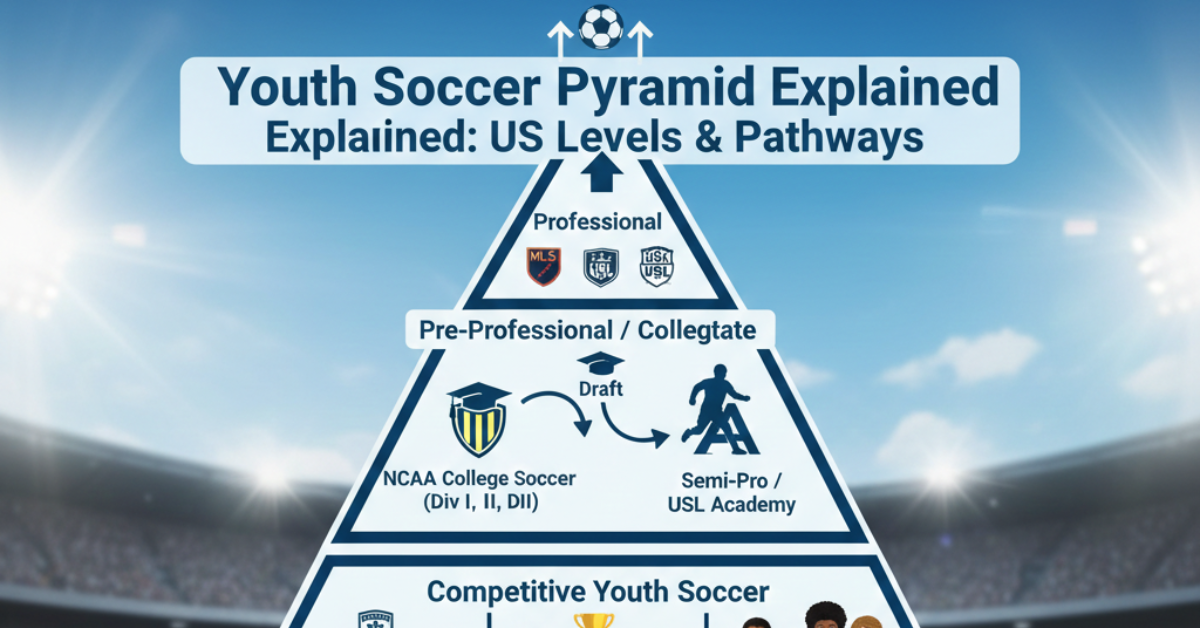
A major reason families study the US youth soccer pyramid is the college recruiting process.
Here’s how it connects:
-
Competitive club soccer builds exposure.
-
Elite tournaments attract college scouts.
-
High-level leagues provide better recruiting visibility.
That said, players can earn college opportunities from various levels. Talent, academic performance, athleticism, and consistency matter more than league logos alone.
Key Differences Across Youth Soccer Levels
Here’s a quick comparison to simplify things:
| Level | Tryouts | Travel | Training Intensity | Goal |
| Recreational | No | Minimal | Low | Fun & basics |
| Competitive | Yes | Regional | Moderate-High | Development |
| Elite/National | Yes | Regional/National | High | Exposure |
| Academy | Yes (Selective) | National | Very High | Pro/College pathway |
Understanding these distinctions makes youth soccer levels explained much clearer for parents and players alike.
Common Misconceptions About the Youth Soccer Pyramid
Myth 1: Higher Always Means Better for Every Child
Not necessarily. The right level depends on:
-
Personal goals
-
Commitment level
-
Financial considerations
-
Family schedule
Myth 2: You Must Start Elite to Succeed
Many professional players began in local leagues before advancing. Development isn’t always linear.
Myth 3: More Travel Equals More Development
Quality coaching and proper training matter more than long-distance tournaments.
Choosing the Right Level for Your Child
When evaluating where your child fits within the youths soccer pyramid, ask:
-
Does my child love soccer—or just like it?
-
Are we prepared for travel and higher expenses?
-
Is development or fun our priority right now?
-
How does the coaching quality compare?
Youth sports should balance growth, enjoyment, and long-term well-being.
FAQs About the Youth Soccer Pyramid
What is the US youth soccer pyramid?
The US youths soccer pyramid is the structured system of leagues and competition levels that range from recreational soccer to elite academy programs.
What is the highest level of youth soccer in the US?
MLS NEXT and elite professional academies sit at the top of the youths soccer league pyramid.
Can players move between levels?
Yes. Players often move from recreational to competitive or from competitive to elite leagues as they develop.
Does playing at a higher level guarantee a college scholarship?
No. College recruitment depends on performance, academics, exposure, and fit—not just the league.
What age does competitive soccer typically start?
Competitive travel soccer usually begins around U8 to U10, depending on the club and region.
Conclusion: Understanding the Youth Soccer Pyramid
The youth soccer pyramid isn’t about labeling players—it’s about understanding pathways. From recreational leagues to elite academies, each level serves a purpose within the broader US youth soccer pyramid.
When youth soccer levels are explained clearly, parents can make informed choices that match their child’s passion, talent, and lifestyle. Not every player needs to climb to the top of the youth soccer league pyramid to have a meaningful, rewarding experience.
If you found this guide helpful, consider exploring:
-
A deeper breakdown of college recruiting timelines
-
Cost comparisons between rec and travel soccer
-
Training resources for developing technical skills at home