

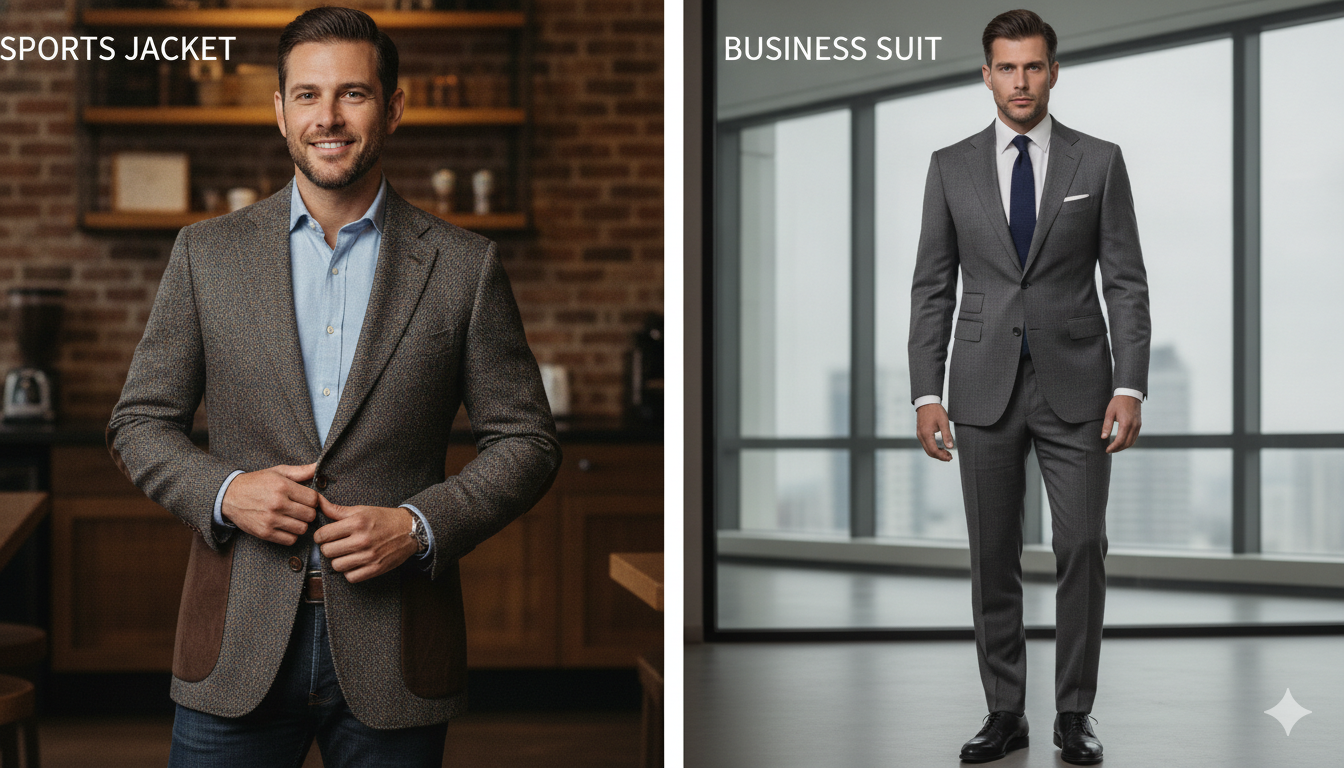
Have you ever looked into your closet and felt completely confused? You are not alone. Choosing between a sports jacket vs business suit can puzzle anyone. Both items look great on a hanger, but they serve totally different purposes. Wearing the wrong one to a big meeting or a casual dinner can feel awkward. I remember my first major networking event where I wore a casual coat instead of a proper outfit. It taught me a valuable lesson about men’s fashion rules.
Understanding the core differences will save you time and money. It also helps you dress with absolute confidence every single day. This helpful guide will break down everything you need to know simply. We will look at fabrics, fit, patterns, and style rules. By the end, you will always pick the perfect option for your next event. Let us dive into the ultimate breakdown of the sports jacket vs business suit dilemma.
What Is a Business Suit Exactly?
A business suit is a complete outfit made from the exact same roll of cloth. The jacket and the trousers always match perfectly in color, fabric, and texture. This matching nature is what defines the entire look. Tailors design them to be worn together as a single unit. If you wear the jacket with different pants, you might ruin the fabric over time.
These outfits are the gold standard for formal and professional settings. They send a clear message of authority, respect, and serious intent. Most traditional options come in solid, dark colors like navy blue, charcoal gray, or deep black. They are meant to look sleek, unified, and highly polished from top to bottom.
What Is a Sports Jacket Exactly?
A sports jacket is a standalone coat designed to be worn without matching trousers. Historically, men wore them for outdoor activities like hunting or watching sports games. That history gives them a more rugged, casual, and athletic origin. They are meant to be mixed and matched with different styles of pants. You can pair them with jeans, chinos, or slacks easily.
This piece of clothing offers incredible freedom for your personal style. It does not come with matching pants, so you must choose your own. It is the ultimate tool for looking sharp without looking overly formal. You can wear it to a nice dinner, a creative office, or a casual weekend party.
The Big Fabric Differences Explained
The material used makes a huge impact on how these garments look and feel. A traditional suit usually features smooth, high-quality combed wool. This fabric has a slight shine and a very fine texture. The surface feels silky and looks uniform, which adds to the formal vibe.
On the flip side, the alternative option uses thicker, heavier, and more textured materials. You will often find them made from tweed, flannel, linen, or thick cotton corduroy. These fabrics have a lot of visible depth and feel rougher to the touch. The heavy material helps the coat keep its shape when you are moving around outdoors.
Patterns and Colors to Look For
When it comes to patterns, these two garments sit on opposite sides of the spectrum. Suit patterns are usually very subtle and quiet. You might see faint pinstripes, small windowpanes, or solid corporate colors. The goal is to keep the look clean, professional, and free from bright distractions.
The standalone coat loves bold patterns and vibrant colors. You will see large hounds-tooth prints, bright plaids, and distinct herringbone weaves. Colors can range from earthy browns and forest greens to rich burgundies. These patterns make it obvious that the coat is not part of a matching set.
Tailoring and Fit Differences
The way these items fit your body is also quite different. A formal corporate outfit features a highly structured fit. The shoulders have distinct padding, and the chest area has a canvas lining to create a strong silhouette. It hugs the body closely to create a sharp, professional look.
The casual alternative offers a much looser, more relaxed fit. It has minimal shoulder padding and often lacks a heavy inner lining. Tailors design it this way so you can layer sweaters underneath. It gives your arms more room to move freely throughout the day.
How Buttons and Pockets Change the Look
Small details can tell you exactly what kind of coat you are holding. Formal jackets use plain, smooth plastic or horn buttons that blend into the fabric. The pockets are usually sleek flap pockets or jetted pockets that sit completely flat. This keeps the lines of the outfit looking as smooth as possible.
The casual option often features unique, contrasting buttons made of wood, leather, or bright metal. The pockets are frequently patch pockets, which are sewn onto the outside of the cloth. These external pockets add to the rugged, utilitarian feel of the garment.
When to Wear a Business Suit
There are times when only the highest level of formality will do. You should always choose a matching corporate outfit for formal weddings, funerals, and court appearances. It is also the standard dress code for high-level job interviews and corporate boardrooms.
Wearing one shows that you understand the gravity of the event. It displays professionalism and respect for the people around you. In industries like law, finance, and banking, this style remains the daily requirement. It is an investment in your career advancement and professional reputation.
When to Wear a Sports Jacket
This versatile piece shines in semi-formal, smart-casual, and business-casual environments. It is perfect for a date night at a nice restaurant or a creative business meeting. You can wear it to casual weddings, holiday parties, or parent-teacher conferences.
It works wonderfully when you want to look put-together but not stuffy. If an invitation says “dressy casual,” this is your best option. It allows you to stand out from the crowd without looking like you tried too hard. It is truly the Swiss Army knife of modern menswear.
Can You Mix and Match Suit Pieces?
People often ask if they can wear their formal coat as a casual piece. The short answer is: please avoid doing this. Because the fabric is smooth and shiny, it will look odd without the matching pants. It will look like you forgot your trousers or ruined them.
Furthermore, dry cleaning the jacket more often than the pants will cause the colors to fade unevenly. Eventually, your expensive corporate outfit will no longer match perfectly. Keep your formal sets together and buy a separate casual coat for your mix-and-match needs.
Ultimate Comparison Table
Let us summarize the main points so you can see the differences clearly at a glance.
| Feature | Sports Jacket | Business Suit |
| Matching Pants | Never included; must mix and match | Always included; made from identical cloth |
| Fabric Texture | Rough, heavy, and thick (tweed, linen) | Smooth, fine, and slightly shiny (wool) |
| Patterns | Bold plaids, checks, and bright colors | Subtle pinstripes, solids, and dark tones |
| Fit Style | Loose, casual, and easy to layer | Structured, snug, and highly polished |
| Pockets | Often external patch pockets | Flat flap or hidden jetted pockets |
| Formality Level | Smart-casual to semi-formal | Strictly formal and corporate |
Frequently Asked Questions
Can I wear jeans with a sports jacket vs business suit?
You can absolutely wear jeans with a sports jacket for a great smart-casual look. However, you should never wear jeans with a business suit jacket because the textures will clash terribly.
Which option is better for a first job interview?
A business suit is almost always better for a first interview because it shows high respect. The only exception is a very casual tech startup, where the alternative might work.
Are blazers the same as sports coats?
They are similar but not identical. A blazer is solid-colored (usually navy) with metal buttons, while the other option features heavy patterns and rugged fabrics.
Why are suit jackets more expensive?
They cost more because they include matching trousers made from high-grade, fine wool. The tailoring process is also more complex to ensure a perfect, structured fit.
Can I wear a sweater under a formal jacket?
It is very difficult because formal coats fit tightly around the chest and arms. The casual alternative has extra room specifically designed for layering over knitwear.
Do I need to wear a tie with a sports coat?
No, you do not need a tie. You can leave your top shirt button open for a relaxed, modern look that still looks incredibly sharp.
Conclusion
Navigating the world of menswear does not have to be stressful or complicated. When deciding between a sports jacket vs business suit, simply think about the event you are attending. If the occasion is formal, strict, or corporate, always reach for your matching suit. If the vibe is relaxed, social, or creative, celebrate your personal style with a versatile sports coat. Building a wardrobe with both options ensures you are ready for any invitation that comes your way. Which style do you find yourself wearing more often during the week? Let me know your thoughts or ask a question in the comments below!