

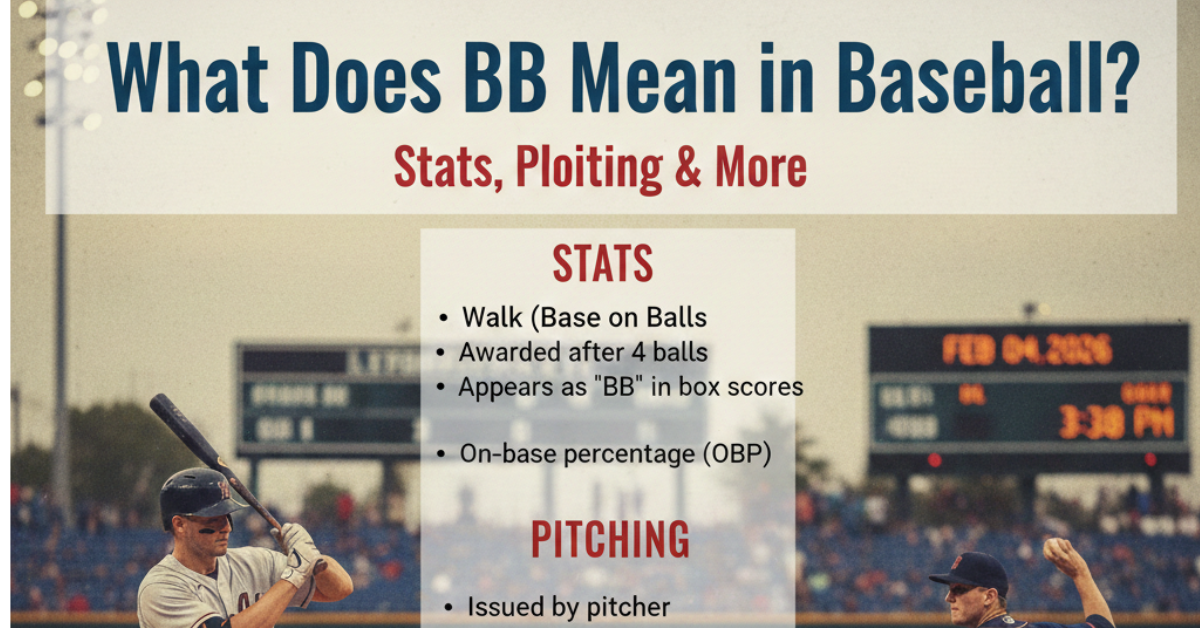
If you’ve ever scanned a baseball box score and paused at “BB,” you’re not alone. So, what does BB mean in baseball, and why does it show up everywhere from player stats to pitching summaries?
Short answer: BB stands for base on balls, more commonly known as a walk. But the real value of BB goes way deeper than just “four balls equals first base.”
In this article, we’ll break down what BB means in baseball stats, how it affects pitching, why it matters strategically, and how to read it like a pro fan or fantasy player.
What Does BB Mean in Baseball?
In baseball, BB means “base on balls.” A batter earns a BB when the pitcher throws four pitches outside the strike zone, and the umpire rules them as balls.
Once that happens:
-
The batter automatically advances to first base
-
No hit is recorded
-
The at-bat officially counts, but not as an official at-bat (AB)
BBs reward plate discipline and punish pitchers who lack control.
What Does BB Mean in Baseball Stats?
When looking at player statistics, BB measures how often a batter reaches base without swinging the bat.
Why BB Matters in Batting Stats
A high BB total usually means:
-
Strong pitch recognition
-
Patience at the plate
-
Ability to extend at-bats
BBs directly impact advanced stats like:
-
OBP (On-Base Percentage)
-
OPS (On-Base Plus Slugging)
-
wOBA (Weighted On-Base Average)
What Does BB Mean in Baseball Pitching?
Now flip things around. When you see BB in pitching stats, it tells a very different story.
BB in Pitching = Control Issues
For pitchers, BB represents:
-
Walks allowed
-
Missed locations
-
Inconsistent command
A high BB total often signals trouble, especially when paired with high pitch counts or short outings.
Key Pitching Stats That Use BB
-
BB/9 – Walks allowed per nine innings
-
K/BB ratio – Strikeouts compared to walks
-
WHIP – Walks plus hits per inning pitched
Elite pitchers keep BB numbers low. Control equals dominance.
Why Walks (BBs) Are a Big Deal in Baseball
Walks might look boring, but they’re incredibly valuable.
BBs Can:
-
Extend innings
-
Tire out pitchers
-
Set up big scoring plays
-
Force defensive adjustments
That’s why modern analytics value BBs more than ever. Teams don’t just want power—they want players who get on base.
As the saying goes: You can’t score if you don’t reach first.
BB vs Other Similar Baseball Stats
Here’s how BB compares to related terms:
-
BB (Base on Balls): Standard walk
-
IBB (Intentional Base on Balls): Pitcher intentionally walks the batter
-
HBP: Hit by pitch (also awards first base)
-
K: Strikeout (the opposite outcome of a walk)
Understanding the differences helps you read box scores and player profiles more confidently.
How BB Impacts Team Strategy
Managers and teams actively track BB rates because they influence:
-
Lineup construction
-
Pitching matchups
-
Late-inning decisions
-
Analytics-driven contracts
FAQ: BB in Baseball Explained
What does BB mean in baseball?
BB stands for base on balls, meaning the batter receives first base after four balls.
What does BB mean in baseball stats?
It shows how many walks a player has drawn or allowed, depending on whether it’s a batting or pitching stat.
What does BB mean in baseball pitching stats?
It represents walks given up by a pitcher and is a key indicator of control.
Is a BB considered a hit?
No. Walks do not count as hits but do count toward on-base percentage.
Why are walks important in baseball?
They help players get on base, extend innings, increase pitch counts, and create scoring opportunities.
Conclusion: Why BB Matters More Than You Think
So now you know exactly what does BB mean in baseball, whether you’re checking batting stats, pitching numbers, or watching a tense ninth-inning at-bat. BBs reward patience, expose control issues, and quietly shape the outcome of games. Once you start paying attention to walk rates, you’ll see baseball through a smarter lens.